Peptide Screening: Hplc & Mass Specification Pureness Guide Pinnacle
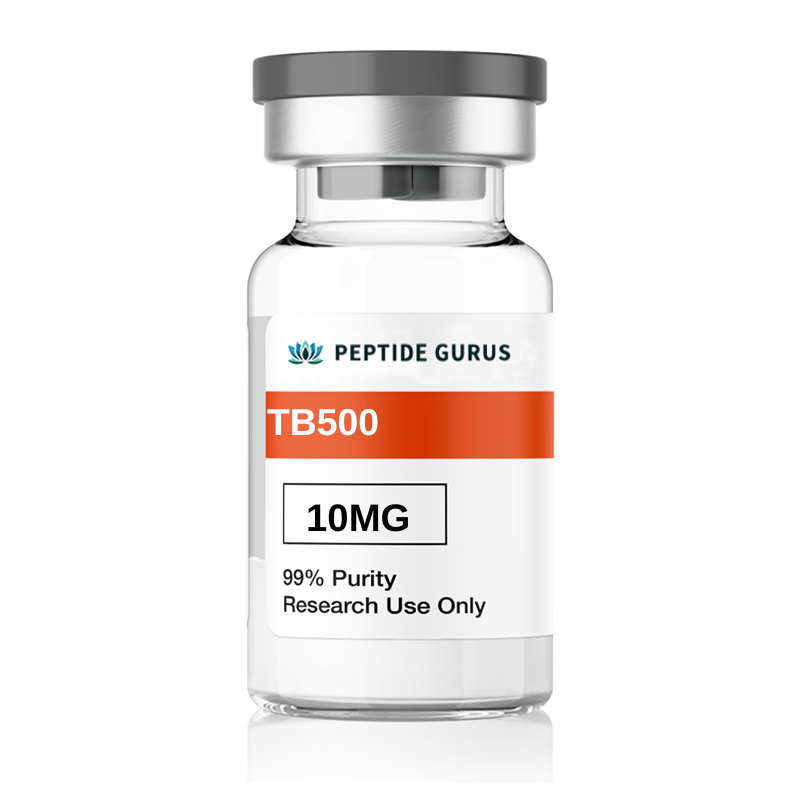
How To Read A Peptide Coa Actual Vs Fake Yet these COAs often come from the supplier's own screening, creating an evident conflict of rate of interest. Even when suppliers declare third-party screening, confirming those cases calls for initiative most customers do not make. Researchers commonly examine mass spectrometry results together with HPLC information to develop a more complete understanding of item quality. As the research peptide market remains to expand, recognizing how peptide pureness testing functions can assist scientists make more informed sourcing decisions and better evaluate provider transparency. Pollutants aren't just non-active fillers; they can actively hinder your work. You can assess analytical documentation for BPC-157, TB-500, Semaglutide, CJC-1295 with DAC, and all other compounds in our research study peptide catalog prior to placing an order. For exploratory screening assays where rough task data suffices, 95% pureness might serve. For measurable receptor binding researches, IC50 resolutions, or any kind of research study where dose-response precision issues, ≥ 98% pureness is highly preferred. The 5% pollutant tons in a 95% pure preparation is not trivial in biological assay systems Thymosin Beta-4 Fragment sensitive to nanomolar concentrations.
Can A Peptide Fall Short Hplc But Pass Mass Spec, Or The Other Way Around?
What machine is utilized to check peptide pureness?
Peptide purity is consistently established by HPLC (high efficiency fluid chromatography). This method enables splitting up and family member quantification of each peptide manufactured. If coupled to a mass spectrometer (MS), this gives molecular mass/ identity details of the target peptide and going along with impurities.
Many third celebration testers offer both MS & HPLC in a solitary examination and will just alert you in the event that Mass Spec does not spot the proper sequence. As a best technique, constantly confirm that your tester is providing MS. Mass Spectrometry (MS) is the only trusted means to confirm identification. HPLC verifies that a leading, reasonably pure substance is present. Mass spectrometry (MS) validates what that intensify in fact is. For us, purity isn't simply a portion-- it's a promise of stability, consistency, and respect for the scientific research being done.
Can Hplc Identify Peptide Degradation?
This is very seldom the instance, nevertheless well a protocol is maximized, and the danger of side responses and insufficient responses means that peptide pureness comes to be a vital issue in the context of the application. One more associated term you may experience is web peptide web content, which is different from purity. Web peptide web content describes just how much real peptide (by weight) remains in the vial relative to non-peptide components like water, counter-ions (e.g., TFA), or barrier salts. It's possible to have a peptide that is, say, 95% pure by HPLC and yet the web peptide web content is something like 70% of the powder's weight (the remainder being water and salts). Don't be surprised-- this is normal and is usually determined by separate analyses (like amino acid evaluation).
Mislabeled peptides present variables that dumbfound research results.
These are generally present at really reduced levels in effectively made peptides and are controlled by ICH Q3C standards for acceptable limitations.
The mass spec result must match this predicted value within acceptable tolerance.
This relative data offers context beyond specific examination results.
The primary approaches for determining peptide pureness are High-Performance Fluid Chromatography (HPLC) and Mass Spectrometry (MS). HPLC separates the target peptide from impurities, quantifying pureness. MS validates the peptide's identification by gauging its exact mass. These 2 strategies offer corresponding info and are the gold requirement in the peptide sector. Peptide Go to this website pureness implies the percentage of the target peptide sequence in an example compared to impurities. It's important due to the fact that contaminations can alter study results, impact medicine security, and concession speculative reproducibility, making high pureness important for exact scientific research. Before dedicating to larger orders or ongoing acquisitions, verify that preliminary items meet asserted specifications. Like Janoshik, MZ Biolabs COAs can be validated through their system, providing an added layer of credibility confirmation. When making use of the peptide reconstitution calculator or preparation dosages, net peptide material provides extra accurate computations than thinking complete material. One documented case entailed a body builder that infused what was identified as Follistatin. The peptide market operates mostly without governing oversight. Unlike pharmaceutical medications that undergo rigorous screening prior to getting to consumers, research peptides exist in a grey location where quality depends entirely on supplier stability. Researchers typically examine pureness along with identification confirmation, testing approaches, and total documentation. A 2016 study released in Nature found that greater than 70% of scientists had actually attempted and fallen short to replicate another researcher's experiments. While peptide pureness isn't the only element, utilizing poorly identified reagents is a recognized factor to irreproducible outcomes. This is why trustworthy providers provide both HPLC and MS data on their Certificates of Evaluation. As particles exit the column, they pass through a detector-- normally a UV detector set to 214 or 220 nm, wavelengths where the peptide bond soaks up light highly. The detector documents how much UV light is absorbed gradually, producing a graph called a chromatogram. Pureness is the percentage of books in the shipment that have every page printed correctly, in the best order, with no missing phases and no added web pages stuffed in.